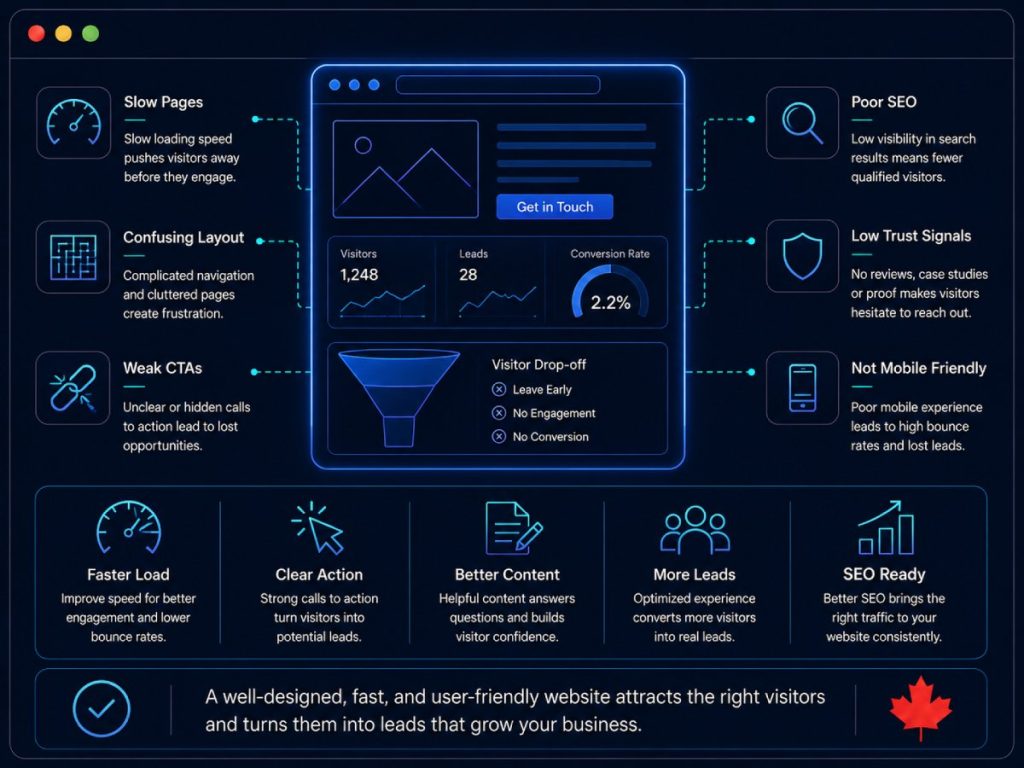
Many business owners invest time and money into a new website, but the site still does not bring enough calls, quote requests, bookings, or form submissions. It may look professional, but if visitors do not understand what you offer, why they should trust you, or what to do next, the website will not generate leads.
This is one of the most common website problems for small businesses. A website should not work like a simple online brochure. It should guide visitors, answer their questions, build trust, and make it easy to contact your business. When the design, content, speed, SEO, and calls to action are not working together, leads are often lost before they ever reach your inbox.
The Core Problem: The Website Has No Clear Strategy
The biggest reason many business websites fail to generate leads is simple: the website was built without a clear business strategy. A good website should have a purpose for every important page. It should explain your services, support search visibility, answer customer questions, and move visitors toward one clear next step.
The Website Looks Good but Does Not Guide Visitors
A beautiful design is helpful, but design alone does not create leads. If the page looks nice but does not clearly explain what your business does, who you help, and why someone should choose you, visitors may leave without taking action. Strong website design and development should combine visual design with clear structure, useful content, and conversion-focused page flow.
The Customer Journey Is Not Planned
Most visitors are not ready to contact you immediately. They need to understand your service, compare options, check your credibility, and feel confident before reaching out. Your website should support this journey with clear service sections, helpful content, FAQs, trust signals, and simple calls to action.
Poor User Experience Makes Visitors Leave
User experience has a direct impact on lead generation. If your website is slow, confusing, hard to read, or difficult to use on mobile, people are less likely to stay. A visitor should be able to understand your business within seconds and move through the page without friction.
Slow Loading Times Reduce Conversions
Slow pages create frustration. When a website takes too long to load, visitors often leave before reading your content or seeing your contact options. Speed also affects SEO performance and user trust. This is why website optimization is important for businesses that want better traffic, better engagement, and more leads.
Mobile Design Is Not Strong Enough
Many potential customers visit your website from a phone. If the layout is hard to use, buttons are too small, content is too crowded, or forms are difficult to complete, leads can be lost quickly. A mobile-friendly website should be clean, fast, easy to scan, and simple to contact from any screen size.
Navigation and Page Layout Are Confusing
Visitors should not have to work hard to find your services, pricing information, examples of work, or contact details. Confusing menus, weak headings, cluttered sections, and too many competing messages make the website harder to use. Clear navigation and clean page structure help visitors move forward with confidence.
Weak Content and Poor SEO Limit Website Traffic
A website cannot generate leads if the right people cannot find it. Many business websites have thin content, unclear service pages, missing keywords, weak headings, or poor technical structure. This makes it harder for search engines and visitors to understand what the business offers.
The Content Does Not Answer Real Customer Questions
Your content should explain your services in a way that matches what customers actually want to know. Visitors often ask questions like: What do you do? Do you serve my area? How does the process work? What makes you different? What should I do next? If your website does not answer these questions clearly, visitors may leave and choose a competitor.
The Website Is Not Built Around Search Intent
Search intent means understanding what someone is looking for when they type a keyword into Google. A service page should not only mention keywords. It should match the visitor’s need and provide useful information. Strong technical SEO and well-planned content help search engines understand your pages and help visitors find the right information faster.
There Is No Helpful Content Strategy
Many websites only have a homepage, a few service pages, and a contact page. That may not be enough to build long-term search traffic. Helpful blog posts, service pages, location pages, FAQs, and comparison content can support your main services and attract more qualified visitors over time.
The Website Does Not Make the Next Step Clear
Even when a visitor likes your business, they may not contact you if the next step is unclear. Lead generation depends on simple conversion paths. Your website should make it obvious how to call, request a quote, book a consultation, or send a message.
Calls to Action Are Weak or Hidden
A call to action should tell visitors what to do next. Examples include “Request a Quote,” “Book a Consultation,” “View Services,” or “Contact Us.” If buttons are hidden, vague, or only placed at the bottom of the page, many visitors will not take action. Strong CTAs should appear naturally throughout the page where they make sense.
Forms Ask for Too Much Information
Long forms can stop people from contacting you. A lead form should be simple and easy to complete. For many service businesses, name, email, phone number, service type, and a short message are enough to start the conversation. The easier the form is, the more likely people are to use it.
Trust Signals Are Missing
Before someone contacts a business, they want to feel safe and confident. Testimonials, portfolio examples, project photos, clear contact information, service details, and professional design all help build trust. For web service businesses, showing real projects and explaining your process can make a big difference.
The Website Is Not Maintained or Improved Over Time
A website is not finished forever after launch. Search behavior changes, competitors improve their websites, plugins need updates, pages become outdated, and technical issues can appear over time. If a website is not maintained, its performance and lead generation can slowly decline.
No One Is Reviewing Website Performance
Without checking analytics, search data, page speed, and form performance, it is difficult to know what is working. Business owners may not see which pages bring traffic, where visitors leave, or which services need better content. Regular review helps turn guesswork into clear improvement steps.
Technical Issues Are Left Unfixed
Broken links, outdated plugins, slow scripts, missing image optimization, weak security, and layout issues can hurt both SEO and user experience. Ongoing website maintenance and support helps keep your website stable, secure, and easier to improve.
People Also Ask
The main reason is usually a lack of clear strategy. Many websites look professional, but they do not guide visitors, explain value clearly, build trust, or make the next step easy. A lead-generating website needs clear content, strong user experience, SEO structure, and simple calls to action.
You can improve lead generation by making your website faster, easier to use, mobile-friendly, and clearer. Add stronger service content, visible calls to action, simple forms, trust signals, and SEO-friendly structure. Regular website optimization also helps improve results over time.
Common mistakes include slow loading speed, weak mobile design, confusing navigation, unclear service pages, hidden contact options, long forms, missing testimonials, poor SEO, and content that does not answer customer questions. These issues make it harder for visitors to become leads.
SEO is very important because it helps the right people find your website when they search for your services. Good SEO supports better visibility, stronger service pages, useful content, and more qualified traffic. More qualified traffic can create more opportunities for leads.
Conclusion: A Website Should Support Real Business Growth
Most business websites fail to generate leads because they are not planned around the visitor. They may look nice, but they do not clearly explain the service, build trust, load fast, rank well, or guide people toward action. Lead generation improves when the website is built with strategy, structure, and the customer journey in mind.
If your website is not bringing enough leads, start by reviewing the basics: page speed, mobile design, service content, SEO, trust signals, calls to action, and contact forms. Small improvements in these areas can make your website easier to use and more effective for your business.
IBWeb helps businesses across Canada build and improve websites with clean structure, fast performance, SEO-friendly development, and clear conversion paths. If your website looks good but does not bring results, explore my website design and development services, website optimization services, or technical SEO services to improve how your website works for your business.