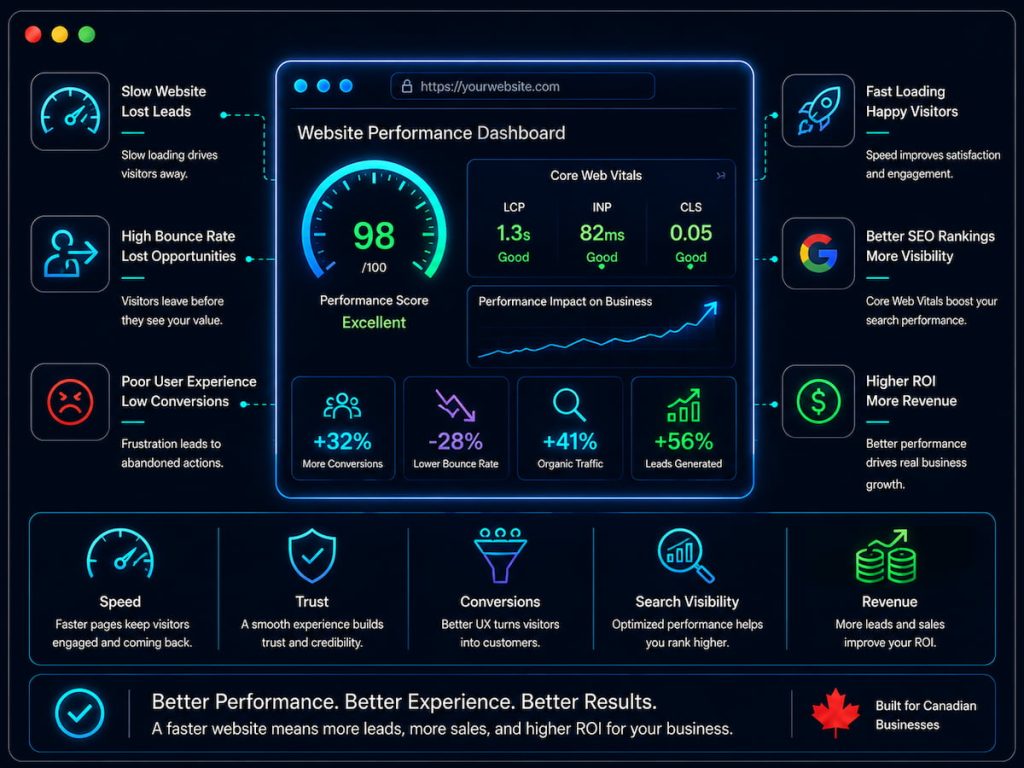
A slow website can quietly cost your business leads, sales, and trust. Visitors may not complain, but they often leave when a page takes too long to load, feels difficult to use, or does not respond quickly on mobile. This is why website performance is not only a technical issue. It is a business issue.
Website performance ROI is the value your business gains when your website becomes faster, smoother, easier to use, and better optimized for search. A high-performing website can reduce bounce rates, improve user experience, support SEO, and help more visitors become leads or customers.
Why Website Performance Matters for Business Growth
Your website is often the first place a potential customer interacts with your business. If the page loads slowly, the layout shifts, or the mobile experience feels frustrating, that visitor may leave before reading your offer. A fast website creates a better first impression and makes it easier for people to move forward.
For service businesses, online stores, and local companies, speed can affect how many people read your pages, click your buttons, submit forms, or call your business. Better performance can also support your search visibility because search engines want to send users to pages that offer a strong experience.
Slow Websites Create Friction
Every extra second of waiting adds friction. Visitors may lose patience before the page finishes loading. They may also assume the business is outdated or less professional. A slow site can make even a strong offer feel weaker because the experience gets in the way.
Fast Websites Feel More Trustworthy
A fast, stable, and well-structured website feels more professional. It helps visitors focus on your content instead of waiting for images, scripts, or forms to load. This can improve trust, especially when someone is deciding whether to contact your business or compare you with a competitor.
How Website Performance Improves ROI
Website performance ROI comes from the connection between speed, user experience, SEO, and conversions. When your website works better, more visitors can reach the information they need and take action. That can create more leads, better engagement, and stronger long-term results.
Better Speed Can Improve Conversions
Visitors are more likely to stay on a website that loads quickly and feels smooth. If your service pages, contact forms, pricing sections, or checkout pages respond faster, people have fewer reasons to leave. This can help turn more traffic into real business opportunities.
- Less waiting: Visitors can reach your content faster.
- Less frustration: A smooth experience keeps people engaged.
- More completed actions: Forms, buttons, and checkout steps become easier to finish.
- Better mobile experience: Fast pages help users on phones and slower connections.
If your website already gets traffic but does not generate enough leads, improving speed and usability can be one of the most practical ways to increase results. IBWeb offers website optimization services for businesses that want faster, cleaner, and more effective websites.
Lower Bounce Rates Protect Your Traffic
Bounce rate shows how many visitors leave without taking another action. A slow or confusing website can increase bounce rate because people leave before they understand your offer. A faster website gives visitors more time to read, compare, and decide.
Reducing bounce rate is valuable because you are making better use of the traffic you already have. Instead of paying for more ads or chasing more visitors, you improve the experience for the people already landing on your website.
Core Web Vitals and SEO Performance
Core Web Vitals are performance signals that help measure real user experience. They look at how fast the main content appears, how responsive the page feels, and whether the layout stays stable while loading. These signals are important because they connect technical performance with how people actually use your website.
Largest Contentful Paint
Largest Contentful Paint, often called LCP, measures how quickly the main visible content loads. This could be a hero image, heading, or main content block. A better LCP means visitors can see the important part of the page sooner.
Interaction to Next Paint
Interaction to Next Paint, often called INP, measures how quickly your page responds after a user clicks, taps, or types. A good INP helps buttons, menus, forms, and interactive elements feel smooth instead of delayed.
Cumulative Layout Shift
Cumulative Layout Shift, often called CLS, measures how stable the page layout is while loading. If text, images, or buttons jump around, users can feel frustrated or click the wrong thing. A stable layout creates a more comfortable experience.
Improving these areas can support both users and search visibility. For deeper technical improvements, IBWeb also provides technical SEO services focused on clean structure, crawlability, performance, and search-friendly development.
What Usually Slows Down a Website?
Many websites become slow over time. New plugins, large images, old themes, extra scripts, and poor hosting can all add weight. The problem is often not one single issue. It is usually a mix of small technical problems that build up and make the website harder to use.
Large Images
Images are one of the most common performance problems. A website may use large files where smaller optimized versions would work better. Compressing images, using the right dimensions, and serving modern formats can make pages load faster without hurting visual quality.
Too Many Plugins and Scripts
Each plugin or third-party script can add extra files, database requests, or layout work. Some are useful, but too many can slow the website down. A performance audit helps identify which tools are needed and which ones are creating unnecessary weight.
Heavy Themes and Poor Code Structure
Some websites are built with heavy themes, unnecessary animations, unused CSS, and bloated JavaScript. Clean website design and development can help reduce this problem by building only what the website actually needs.
Weak Hosting or Server Response
Even a well-built website can feel slow on poor hosting. Server response time affects how quickly the website starts loading. Good hosting, caching, and database cleanup can make a strong difference, especially for WordPress websites.
How to Measure Website Performance ROI
To understand website performance ROI, you need to track both technical metrics and business results. Speed scores are useful, but the real question is whether the website is helping more visitors take action.
Performance Metrics to Watch
- Page speed: How quickly important pages load.
- Core Web Vitals: How stable, fast, and responsive the page feels.
- Mobile performance: How well the site works on phones.
- Page weight: How large the page is and how many files it loads.
- Server response time: How quickly the server starts sending data.
Business Metrics to Watch
- Conversion rate: How many visitors complete a form, call, buy, or book.
- Bounce rate: How many visitors leave without taking action.
- Organic traffic: How much traffic comes from search engines.
- Lead quality: Whether inquiries are relevant to your services.
- Revenue or value per lead: How website improvements support real business value.
When performance improves and business metrics improve with it, you can see the practical value of optimization. This makes website speed easier to understand as an investment instead of a technical expense.
Long-Term Benefits of a Faster Website
A faster website does more than improve one metric. It supports the long-term health of your online presence. When your site is easier to use, easier to rank, and easier to maintain, it can support your business for years instead of becoming a problem that needs constant fixing.
Better Brand Trust
People often judge a business by the quality of its website. A fast, clean, and stable site creates a better impression. It shows that your business is active, organized, and serious about the customer experience.
Better Search Visibility
Performance is not the only SEO factor, but it supports the overall quality of your website. Fast pages, clean code, useful content, and strong technical structure can make your website easier for both users and search engines to understand.
Better Maintenance Over Time
A lightweight and well-structured website is easier to update. It usually has fewer technical conflicts and less unnecessary code. Ongoing website maintenance and support helps keep performance stable after launch.
People Also Ask
Website performance ROI is the business value gained from improving website speed, stability, and user experience. It can include more leads, better conversion rates, lower bounce rates, improved SEO performance, and stronger trust from visitors.
Website speed affects conversions because visitors are more likely to stay, read, and take action when pages load quickly. A slow website can create frustration, increase bounce rate, and reduce form submissions, bookings, calls, or online sales.
Yes. Core Web Vitals are important because they measure real user experience, including loading speed, responsiveness, and layout stability. They are not the only SEO factor, but they support a better website experience and stronger technical quality.
The easiest first steps are usually image optimization, removing unused plugins, improving caching, reducing heavy scripts, and checking page speed on important service pages. A full audit can show which issues are causing the biggest slowdown.
Website performance should be checked after major updates and reviewed regularly. Monthly or quarterly checks are useful for most business websites, especially if you add new plugins, publish new pages, upload many images, or update your theme.
Conclusion: A Faster Website Can Create Better Business Results
Website performance ROI is about more than speed scores. It is about creating a better experience for visitors and making your website work harder for your business. A faster site can help reduce bounce rates, support SEO, build trust, and increase the number of people who contact you or buy from you.
If your website feels slow, has poor Core Web Vitals, or does not convert traffic into leads, it may be time to review its performance. Improving images, code, hosting, structure, and mobile usability can make the website easier to use and more profitable over time.
IBWeb helps businesses across Canada improve website speed, technical SEO, user experience, and long-term website structure. Explore my website optimization services, technical SEO services, or website maintenance services to make your website faster, cleaner, and more effective.